
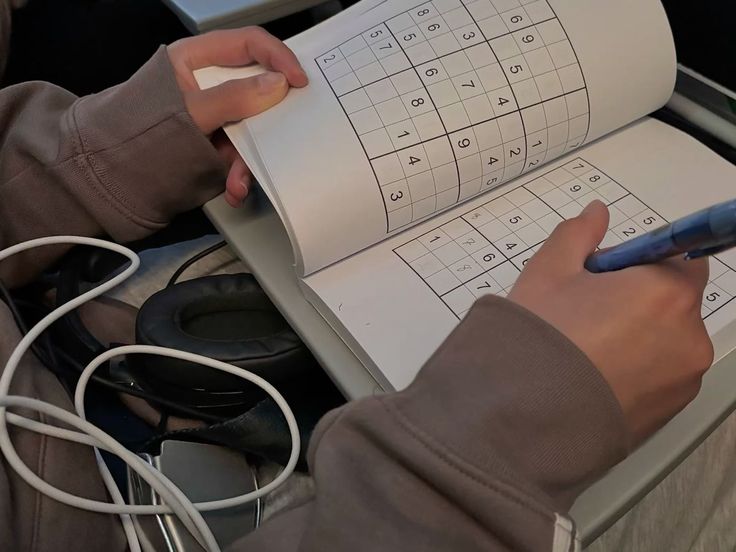
Walk into any airport, doctor’s waiting room, or morning train, and you are almost guaranteed to spot someone pencil in hand, eyes locked onto a 9×9 grid. Since its global explosion in the mid-2000s, Sudoku has evolved from a simple newspaper pastime into a worldwide obsession. But what is it about these little number grids that keeps millions of people hooked daily? Why does “unshackling sudokus and puzzles” feel so deeply satisfying?
The answer lies not just in the numbers, but in the intricate ways our brains are wired. Let’s dive into the fascinating psychology and neuroscience behind the addictive nature of Sudoku.
Contents
1. The Dopamine Loop: The Joy of the ‘Aha!’ Moment
At its core, Sudoku is a game of pattern recognition and logical deduction. Every time you scan a row and successfully place a missing 5 or 9, your brain experiences a miniature victory. In response, your brain releases a small surge of dopamine the neurotransmitter associated with pleasure, reward, and motivation.
This dopamine release acts as positive reinforcement. Your brain learns that solving a cell feels good, prompting you to seek out the next cell, and then the next. Before you know it, you are trapped in a satisfying loop of problem-solving and chemical reward, leading to the classic ‘just one more row’ feeling.
2. The Zeigarnik Effect and the Need for Closure
In psychology, the Zeigarnik Effect states that people remember uncompleted or interrupted tasks much better than completed ones. An empty Sudoku grid represents an unfinished tension. The human mind naturally craves symmetry, order, and completion.
When you look at an unsolved Sudoku, your brain perceives it as an open loop that needs to be closed. Leaving a puzzle half-finished creates a mild cognitive dissonance a mental itch that you can only scratch by filling in those final remaining squares. The sense of relief and satisfaction when completing the final grid is the ultimate resolution of this psychological tension.
3. Mindfulness and ‘Flow State’ Escape
In a world filled with endless notifications, work stress, and digital noise, Sudoku provides a rare sanctuary of single-task focus. When solving a puzzle, you enter what psychologist Mihaly Csikszentmihalyi calls the flow state a state of intense, energized focus and full involvement in an activity.
Because Sudoku requires active logical deduction but no emotional stakes, it acts as a form of active meditation. Your worries about the future or regrets about the past fade away as your working memory focuses entirely on the relationships between numbers. It’s a perfect, healthy escape mechanism that exercises your cognitive muscles while calming your nervous system.
4. The Control Factor in a Chaotic World
Life is often unpredictable, messy, and unfair. Sudoku, however, is governed by strict, unwavering rules. There is no guesswork required; every puzzle has one unique, perfectly logical solution. Unshackling sudokus and puzzles gives us a sense of agency and control. We know that if we apply the correct logic and patience, we will succeed. This predictability is highly comforting to the human psyche, especially during stressful times.
Conclusion: Keep Unshackling Your Mind
Sudoku is not just a game; it is a workout for your brain and a soothing balm for your mind. By understanding the psychology behind its addictive nature, we can appreciate it even more as a tool for cognitive fitness and daily mindfulness. So next time you grab your pencil, remember: you’re not just wasting time; you’re rewarding your brain!