
When it comes to brain training and mental longevity, we are spoiled for choice. From classic newspaper grids to ancient board games, there are countless ways to keep our minds sharp. Three giants stand above the rest: Sudoku, Crosswords, and Chess.
While all three are touted as excellent workouts for the gray matter, they actually train very different cognitive pathways. Let’s break down the science behind each game to find out which one is best suited for your cognitive goals.
Contents
1. Sudoku: The Visual-Spatial Logic Builder
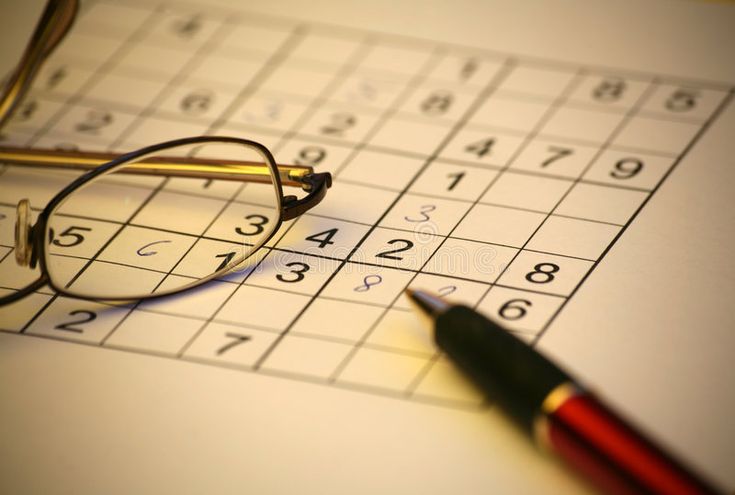
Unlike what many believe, Sudoku is not a math game. It is a game of pure visual-spatial logic and rule-based deduction. When you solve a Sudoku, you are exercising your working memory and executive functions.
- Cognitive Benefits: Improves pattern recognition, sharpens working memory, and trains your brain to filter out irrelevant information.
- Brain Regions Activated: Primarily engages the prefrontal cortex and parietal lobes, which are responsible for planning, decision-making, and spatial awareness.
- Best For: Enhancing logical analysis, improving focus, and developing systematic problem-solving strategies.
2. Crosswords: The Verbal and Semantic Memory Trainer
Crossword puzzles rely on a completely different cognitive domain: verbal intelligence, semantic memory, and language processing. Instead of looking for patterns in space, you are searching your brain’s vast library of words, associations, and trivia.
- Cognitive Benefits: Expands vocabulary, improves word retrieval (combating the “tip of the tongue” phenomenon), and strengthens associative thinking.
- Brain Regions Activated: Engages the temporal and frontal lobes, where vocabulary, language comprehension, and memory retrieval processes are managed.
- Best For: Maintaining verbal agility, improving recall speed, and expanding general knowledge.
3. Chess: The Strategic and Forward-Planning Powerhouse
Chess is the ultimate test of working memory, visualization, and strategic thinking. Unlike Sudoku, which has static rules and one solution, Chess is dynamic, adversarial, and requires you to calculate multiple steps ahead while predicting your opponent’s response.
- Cognitive Benefits: Dramatically boosts working memory, teaches foresight and patience, and enhances fluid intelligence (the ability to solve new problems).
- Brain Regions Activated: Bilateral activation of the brain, engaging both the creative right hemisphere (for pattern visualization) and the logical left hemisphere (for calculation).
- Best For: Deep strategic thinking, situational adaptability, and building high-level cognitive reserve.
Comparison Table: Cognitive Impact
| Game | Primary Brain Skill | Memory Type Trained | Ideal For |
|---|---|---|---|
| Sudoku | Logic & Deductive Reasoning | Working Memory | Focus, structure, systematic analysis |
| Crosswords | Verbal & Trivia Retrieval | Semantic Memory | Language skills, memory recall, vocabulary |
| Chess | Calculation & Strategy | Short-term & Long-term Memory | Foresight, planning, visual calculation |
Conclusion: The Ultimate Brain Workout
Which is better for your brain? The scientific consensus is that variety is key. If you only do crosswords, you will become excellent at word games, but your spatial logic won’t improve. If you only play chess, your word-recall speed won’t benefit.
To build a truly resilient, high-performing brain, combine them! Spend some time unshackling sudokus and puzzles for sharp logic, do a crossword for verbal fluency, and play a game of chess to build long-term strategic foresight.